Things to do
Fischmarkt: which crowd are you joining?
The Sunday market by the water divides visitors sharply. What happens there, which crowd you will be joining, and why the hour you arrive decides everything.
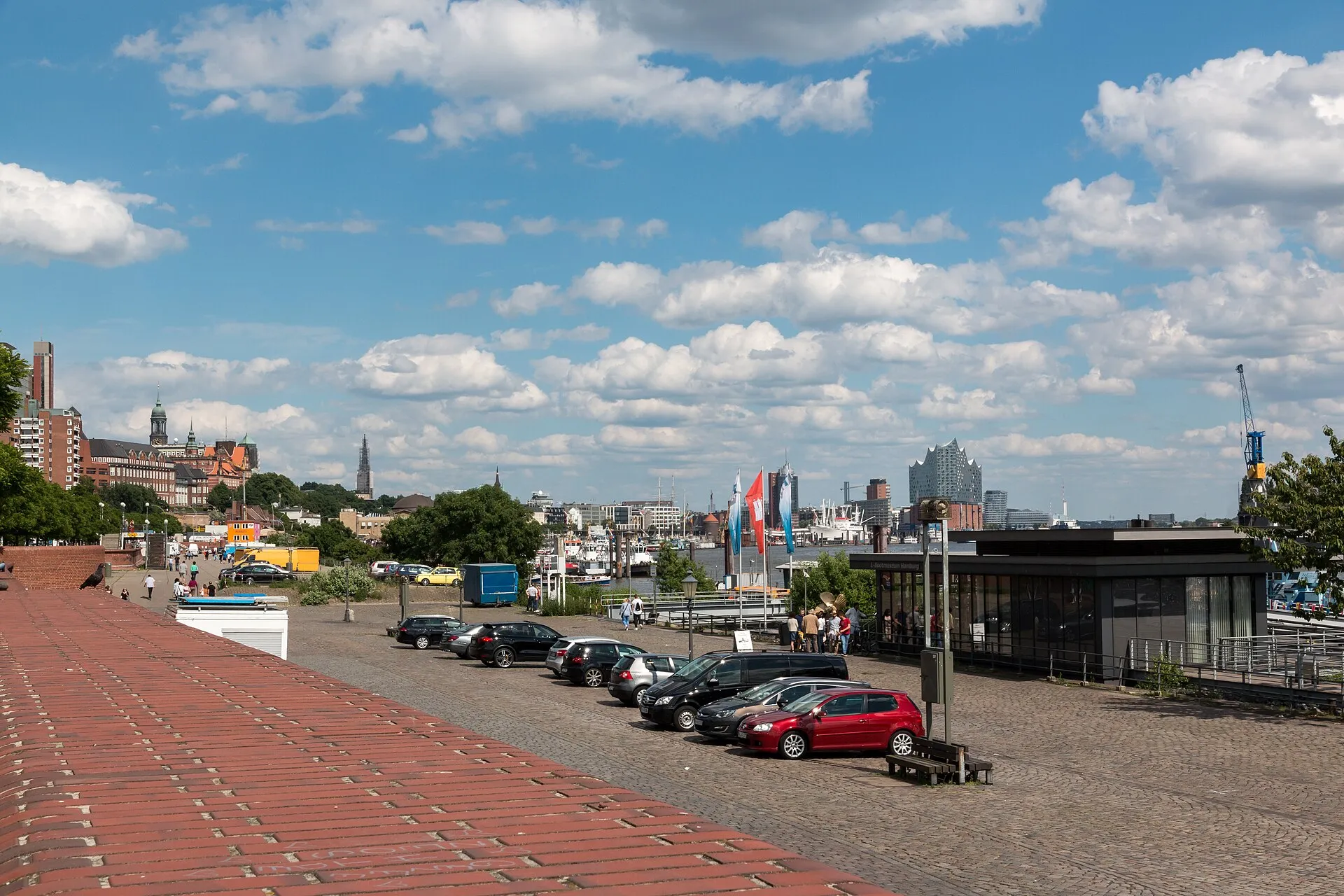
A Sunday morning market on the waterfront, running for a couple of centuries, selling fish and fruit and plants and a quantity of things nobody needs. Inside a covered hall beside it, a band plays to a room containing two entirely different populations.
That last detail is the whole of the experience, and it is what makes this worth a page rather than a line.
The two crowds
The market draws people who have been up all night from the nightlife district a few streets away, and people who got up early on purpose. Both are present at the same time, in the same hall, in visibly different conditions.
That collision is the reason the Fischmarkt is written about at all. As a place to buy fish it is one of many; as a social spectacle it is unique in this city, and it does not require you to participate in either half.
Whether you find it cheerful or grim depends largely on which group you belong to, and on how much sleep you have had.
What actually happens
Sellers work the crowd with a practised patter, filling baskets with more than anyone asked for and selling them cheap as the morning runs out. That performance is genuinely entertaining, needs no German to follow, and is the part visitors remember.
Around it, an ordinary market: produce, plants, cheese, bread, some clothing, and the usual quantity of tat. Locals shop here. It has not been converted into a visitor attraction, which is more than can be said for most markets of this age in western Europe.
The covered hall is the loud part. Live music, beer at an hour that some people consider early and others consider late, and a floor full of both.
The hour decides everything
Go early for the market. Sellers are set up, produce is at its best, the crowd is thinner and it functions as a market.
Go late for the theatre. Stalls are clearing, prices drop, the patter gets faster, and the hall is at its noisiest. The two experiences are barely the same event.
Go in between and you get some of each, which is what most visitors do.
The market runs on Sunday mornings and finishes before midday, and that ending is firm rather than gradual. Arriving at what seems like a civilised hour is how people find themselves looking at empty trestle tables. Check the current times on the city’s own information before you set an alarm, because they shift with the season and we do not publish them.
Practical notes
Dress for the waterfront. This is the open air beside a river in northern Europe and it is colder there than it was outside your hotel.
Bring cash. Card acceptance among the traders is improving and still not universal, which is true across this city more generally.
Do not buy in the first ten minutes. Prices fall as the end approaches, and the oversized baskets that make the spectacle worth watching are a late-morning phenomenon.
Expect crowds and keep valuables secure, as you would at any dense street event. The safety guide covers the general pattern.
Who should skip it
Anyone hoping for a quiet Sunday morning. Families with young children who will find the crowd and the noise difficult, though older children generally enjoy it. Light sleepers who would have to get up at an unreasonable hour for something they are lukewarm about.
There is also a fair argument that the whole thing is overrated relative to the warehouse quarter or a ferry crossing, and that a visitor with one free morning should spend it on one of those instead. The things to do hub sets out the alternatives.
Combining it with the rest of the day
The market sits on the waterfront below the nightlife district, which means several things are within a short walk.
A scheduled ferry from nearby is the natural follow-on, and a Sunday morning crossing with the market crowd aboard is a particular experience. West along the river the path leads toward the beaches on the northern bank.
Alternatively, sleep, and go in the afternoon to the Speicherstadt instead, which is the better use of a Sunday for most people.
Where to stay nearby
St. Pauli is a short walk uphill and the obvious base if the market is a priority, particularly if you intend to arrive from the night rather than from bed.
Altona and Ottensen are the calm alternatives to the west, close enough to walk along the water.
What we are not telling you
No opening times, no prices, and no claims about how old the market is or how many stalls it holds.
Times shift seasonally and belong to the city. Prices at a market change by the hour, which is the point of it. Figures about its history get repeated between guides until nobody knows the source, and this site does not publish those without one.
The short version
Go once, on a Sunday, either early for the stalls or late for the hall. Bring cash, dress for the water, and do not buy anything in the first ten minutes. If you would rather not get up, the warehouse quarter in the afternoon is the better Sunday and nobody will know.
No times, no ticket prices
Opening hours, ticket prices and tour durations belong to the venue and the operator, and they change. This page describes what the place is and who it suits, then leaves the numbers where they are kept current. Check the official site on your dates, and see how we rank for the reasoning.
Last reviewed . Editorial analysis and reference information. We have not visited on your behalf, and nothing here is a review.
Common questions
- What is the Hamburg Fischmarkt?
- A long-running Sunday morning market on the waterfront, selling fish, produce, plants and a great deal else, with a covered hall where live bands play. It starts very early and finishes before lunch, which is the detail visitors most often get wrong.
- What time should I go to the Fischmarkt?
- Early if you want the market, later if you want the atmosphere. The two crowds barely overlap: people who have been out all night, and people who got up for it. Arriving near the end means thinning stalls and a covered hall in full swing.
- Is the Fischmarkt worth visiting?
- Once, and it depends entirely on what you want from it. As a piece of trade it is genuinely working rather than staged. As a spectacle it is loud, crowded and unlike anything else in the city. Anyone wanting a quiet Sunday should stay away.
- Is the Fischmarkt free?
- Entry costs nothing and the site is open to anyone. You are on the waterfront in the open air, so the weather matters more than usual. Buying anything is optional, and plenty of visitors go purely to watch the sellers work.