The old town between the main station and the warehouse district, dense with sights and with the widest choice of transport. Convenience first; character comes second here.
- Noise
- Moderate, city hum
- Best for
- short breaksearly trainssightseeing
Where to stay
Staying by the main station buys you an easy arrival and an early train. What it costs you in atmosphere, which side to book, and when to sleep elsewhere.
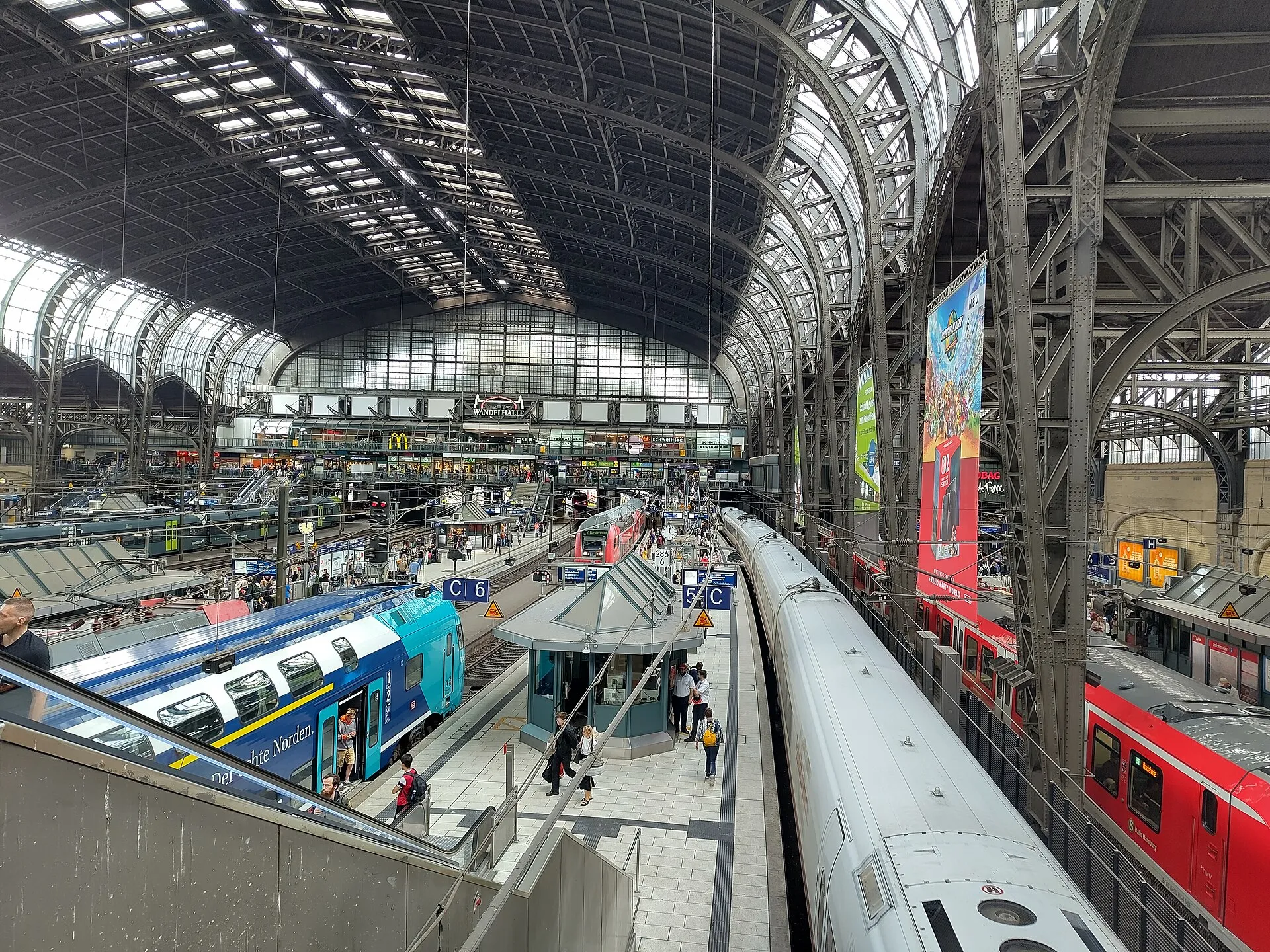
The main station is the single most useful address in this city for a specific kind of trip, and a mediocre one for every other kind. That trade is what this page is about.
Almost every visitor arrives here, whether by train or on the airport line, and a good number leave from here at an unreasonable hour. Being able to walk to that platform is worth real money on the morning it matters.
Anyone with an early departure. A train before eight turns any other district into a logistics problem: a first connection that may not run, a taxi booked the night before, an alarm set forty minutes earlier than it needed to be. Walking to the platform removes all of it.
Anyone arriving late. The same in reverse. A delayed flight and a last connection you are not sure about is a bad end to a travel day.
Anyone with heavy luggage, a pushchair, or someone in the party who does not enjoy hauling a case across a city.
Anyone changing hotels mid-trip, which is more common than it sounds on a week that mixes work and leisure.
Late bookers. This is the deepest accommodation stock in the city across every price band, so it still has rooms when the small quarters have nothing. During a trade fair, that alone can decide it.
The immediate surroundings of any large terminus are the same everywhere: functional, busy, a bit worn, with a population that includes people who are not having a good day. This one is no exception, and it is noticeably rougher at night than in the afternoon.
That is not danger, and it is worth being precise rather than alarmist. What you get is unpleasantness rather than risk: some street drinking, some noise, a concourse that never empties. The safety guide sets out the realistic version.
You also get very little reason to walk around. Nothing near the station rewards an evening stroll, so your evenings will happen elsewhere and you will come back here to sleep.
Which side. The station has two flanks and they are different places.
Toward the old town, the streets are calmer, better kept, and connect directly into the sights, the canals and the warehouse quarter. This is where the argument for staying near the station is strongest, because you get the convenience without the worst of the surroundings.
On the eastern side, the streets are plainer and cheaper, and closer to the long-distance platforms. For a single night before a six o’clock departure that is a perfectly rational booking. For three nights of sightseeing it is a poor one.
A listing will describe both as by the main station. The pin on the map tells you the truth, and it takes ten seconds to look.
More lines serve this area than any other part of the city, which is the second reason it works. A closure on one becomes a detour rather than a lost evening, and every district in this guide is reachable without a preliminary trip into the centre.
The airport line runs from here directly, which is the practical reason so many visitors end up staying nearby on their first or last night. The airport guide covers the ticketing trap on that particular journey, which catches out more first-time visitors than anything else in the city.
Walking, the old town starts immediately and the warehouse quarter is beyond it. We publish no walking times until they have been measured, so check your own route rather than trusting a listing’s estimate.
If the trip is longer than three nights. The convenience is front-loaded into arrival and departure; the rest of the stay you are simply in a plain part of town.
If you want an evening on your doorstep. Nothing here supplies one.
If you sleep badly. Traffic, trams of people, and a building that may face the concourse. Ask about the aspect, and treat a courtyard room as worth paying for.
If the harbour is the point of the trip. You are on the wrong side of the centre, and the waterfront districts exist precisely for that.
Confirm the actual walk to the platform, not to the building. Large stations have several entrances and the wrong one adds ten minutes with a suitcase.
Ask which way the room faces, as everywhere in this guide, and with more force here than in most districts.
Check the cancellation terms if the reason you are booking is a train, because trains change.
And compare a night here against a night in the old town proper. Frequently the difference is small, and the second one is a nicer place to be for the twelve hours you are awake.
Measured on the real pedestrian network from the middle of each district, not in a straight line, which around here would lie to you: the Elbe and the canals decide most of these walks.
Beyond a 45-minute walk, and therefore a train question rather than a walking one: Altona, Eimsbüttel, Eppendorf, Winterhude, Barmbek, Ottensen.
The old town between the main station and the warehouse district, dense with sights and with the widest choice of transport. Convenience first; character comes second here.
Between the inner lake and the harbour, with the arcades, the opera and most of the city-centre hotel stock. If you want to walk everywhere and never take a train, this is the address.
A narrow strip of villas and small hotels between the outer Alster and the canals, minutes from the centre and entirely detached from it. Water on one side, silence on the other.
Distances and journey times belong to the operator and to your own map application, and we do not estimate them from memory. This page tells you which districts serve this address and what each one costs you in return. See how we rank for the standard.
Last reviewed . Editorial analysis, not a first-hand account. No property is named and no price appears anywhere on this site.