City guide
Christmas markets: where to sleep, and when to book
The markets fill the centre for six weeks and change what a good district is. Which quarters work, which to avoid, and how far ahead to book.
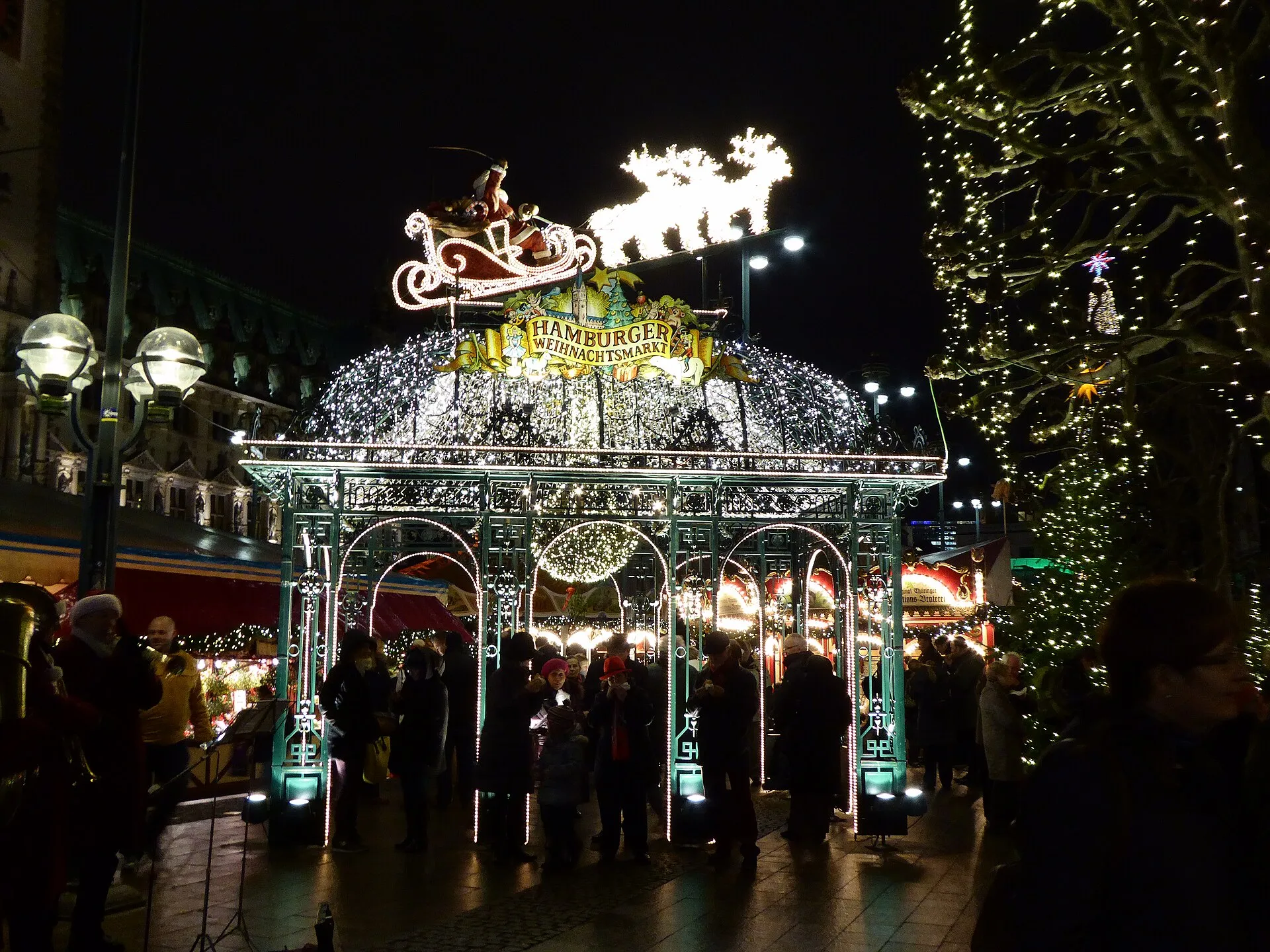
The market season changes the accommodation question in this city for about six weeks, and it changes it in a way that is easy to plan for because it happens every year on roughly the same schedule.
This page is about where to sleep during it. The wider seasonal picture is on best time to visit.
What the season actually is
From late November until shortly before Christmas, several markets run across the city. The largest sits in front of the city hall, and others cluster in the surrounding streets, in the western quarters, and along the water.
Two features matter for a visitor. They are close together, so you can see several on foot in an evening rather than travelling between them. And the ones away from the centre have a noticeably different character from the main tourist-facing one, which is worth knowing before you conclude the city’s markets are crowded.
Exact dates are set each year. We do not publish them, for the reason on how we rank: a date printed here would be wrong within a year, and the city and the markets themselves maintain the current version.
Where to stay
The Altstadt and Neustadt are the obvious answers and, unusually for this guide, the ones we would actually recommend. The main markets sit between them, so the whole appeal — walking out of the door into one, going back for a warm room, going out again — works without a single journey. In a season built around cold evenings, that matters more than in any other month.
Both are also the districts where the covered arcades help, which is a genuine advantage in December rain that no waterfront quarter can match.
Sternschanze and Ottensen are the alternative if crowds are the thing you want to avoid. You are two stops from the centre, the local markets are smaller and more relaxed, and the evening ends somewhere with better food and fewer people.
HafenCity is the weakest choice in this specific season. The quarter’s appeal is an open waterfront, which in December is exposed, dark early and largely empty, and the market crowd is elsewhere anyway.
Crowds, and how to avoid them
The single most useful piece of advice: go on a weekday evening.
Weekends between late November and Christmas are the crush. The same market on a Tuesday at six is pleasant, walkable and half as loud, and the hotel rate for a Tuesday is lower as well. Visitors who can choose their days get a much better version of the season for less money.
Late afternoon into early evening is the good window: the lights are on, the after-work crowd has not yet arrived in full, and there is still some daylight in the sky. By eight on a Saturday the main market is shoulder to shoulder.
Booking
Treat the season as a citywide compression rather than a local one. Rates firm everywhere at once, availability tightens in the centre first, and the pattern is annual and predictable — the mechanism is the same one described in why rooms cost triple, just broader and shallower.
Book months ahead for weekends. For weekdays you have more room, and the booking windows piece sets out how far ahead each district actually needs.
One extra caution: the small quarters sell out first as always, so Sternschanze at three weeks’ notice in December is usually a lost cause.
What the season does to the rest of the city
The markets are the reason to come and they are not the whole trip, so it is worth knowing what else changes.
Daylight is the first thing. This far north the afternoon closes early in December, which sounds like a drawback and is the opposite: the markets exist to be seen in the dark, and by four in the afternoon they are at their best. Plan the indoor things for the middle of the day and let the evening be the lit part.
Damp is the second, and it is the quality that catches out visitors who have been comfortable at a market in a drier climate at the same temperature. Cold coming off water behaves differently, which is why the practical note further down insists on it.
The third change is indoors. Museums, the concert hall and the covered arcades are all doing steady business in exactly this period, and a wet December afternoon is when the rain guide earns its place.
Going with children
The markets divide sharply by hour rather than by location, and that is the whole trick.
Early afternoon is genuinely good: room to move, the rides and the smaller markets are approachable, and nobody is queuing. From about five the same squares become a crush of adults holding hot drinks at exactly the height of a child’s head, which is unpleasant for everyone and worse for the shortest person present.
So the workable plan is markets early, back to the room, and out again only if everybody has the appetite. That pattern makes the case for sleeping close in during this season stronger than at any other time of year — a twenty-minute journey each way is tolerable once and punishing twice.
Pushchairs are hard work in the busiest squares after dark and fine before it. Carrying a small child is easier, and the smaller markets in the western quarters are more forgiving than the central ones throughout.
Practical points
Dress for standing still. Market evenings involve very little walking and a lot of standing outdoors in a northern port. That is colder than a walk, and visitors underestimate it every year.
Carry some cash. Card acceptance among stallholders is improving and still not universal, which is true across this city more generally.
Watch bags in the crowd, which is the one realistic risk of the season and the same one described on the safety guide.
Have an indoor plan. A wet December evening kills an outdoor market, and the museums and concert halls are a genuinely good substitute rather than a consolation — Hamburg in the rain is that plan, written out.
And if the budget is the constraint rather than the weather, is Hamburg expensive? sets out what a December trip here actually costs beyond the room. Rates in the market weeks behave the way the piece on price spikes describes, which is worth reading before you judge one.
Why there are no numbers here
Fares, ticket types, opening hours and timetables belong to the operators and venues, and they change. This page therefore explains how things work rather than quoting figures we cannot keep current. Check the official source on your travel dates, and see how we rank for why we would rather leave a gap than print a plausible guess.
Last reviewed . Editorial analysis and reference information only. Nothing here is a first-hand account.
Common questions
- When are the Hamburg Christmas markets?
- The season runs from late November until shortly before Christmas, with exact opening and closing dates set each year by the city and the individual markets. Check their own listings for your year rather than relying on a guide.
- Where should I stay for the Christmas markets?
- The Altstadt or Neustadt, since the main markets sit between them and the whole point is walking out into one. If crowds are the concern, the western quarters put you two stops away with a calmer evening at the end of it.
- Are Hamburg hotels expensive during the Christmas markets?
- Rates firm across the whole city for the season, with weekends much stronger than weekdays. It is a broad, predictable compression rather than a spike, so booking early and choosing a weeknight both work well.
- Is Hamburg good for Christmas markets compared with other cities?
- It has several distinct markets in walking distance of each other, including a large one in front of the city hall, plus the harbour setting that no inland city can offer. Crowds are real but the concentration means less travelling between them.