Between the inner lake and the harbour, with the arcades, the opera and most of the city-centre hotel stock. If you want to walk everywhere and never take a train, this is the address.
- Noise
- Moderate, city hum
- Best for
- shoppingbusinesswalkers
Where to stay
Trade fair weeks fill the whole city, not just the exhibition district. Which quarters put you within walking distance, and how to book one that still exists.
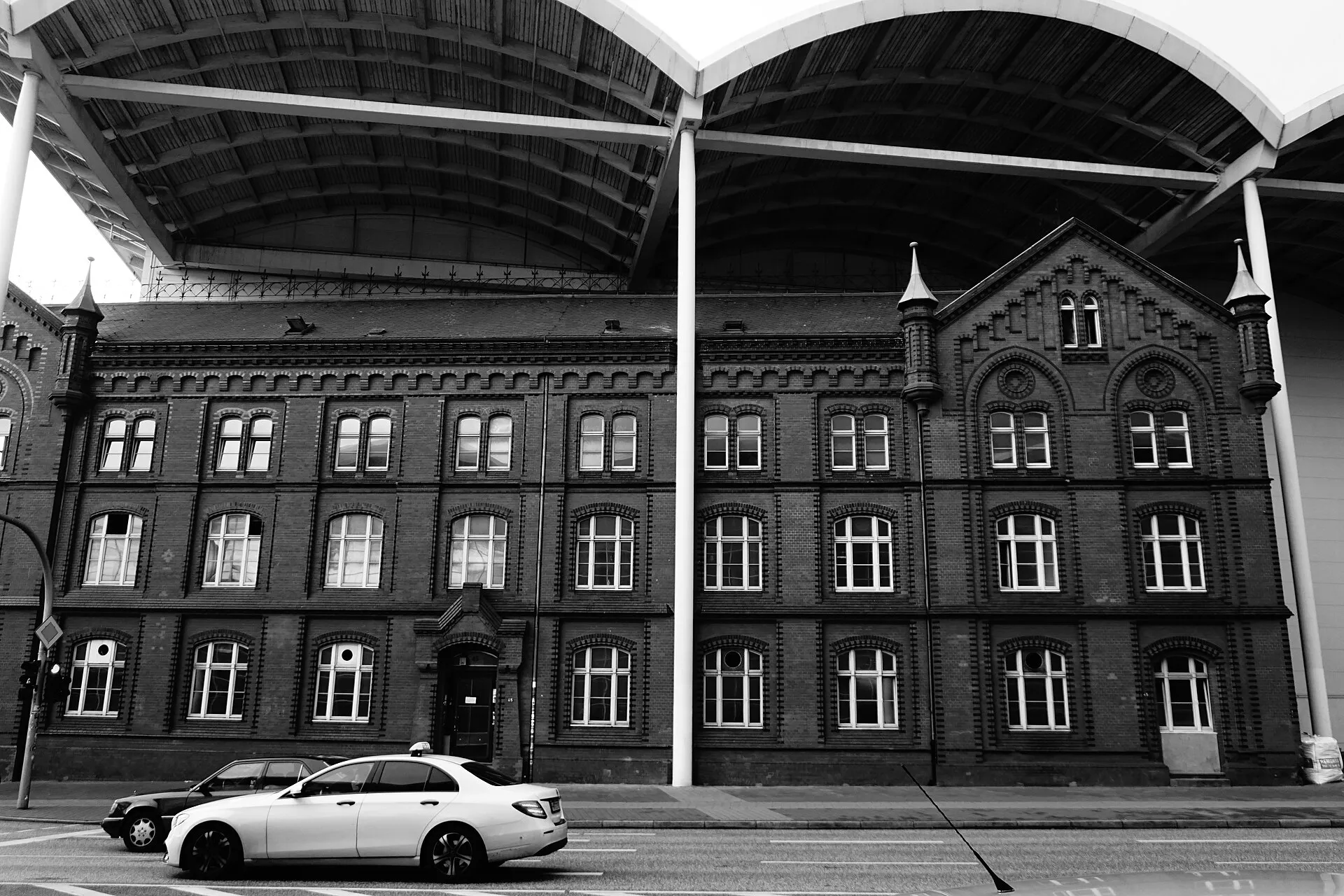
Trade fairs are the reason this site keeps telling you to check a calendar before you judge a hotel rate. This page is the practical version of that advice for the people who are actually attending one.
The good news first: the exhibition grounds sit inside the city, bordered by a park on one side and residential streets on the others. That is unusual. Delegates in many cities commute to a site on a ring road; here you can walk.
Neustadt is the default for a working visit. It is close, it has the deepest transport of the three, and it puts restaurants and a working dinner within a walk. It is also the most expensive, and during a fair that gap widens.
Sternschanze is the shorter walk and the better evening: independent kitchens, a livelier street life, and prices normally below the centre. Two problems, both real. It is a very small district, so it fills first and hardest during a fair. And it is lively rather than restful, which is a poor combination with a seven o’clock start.
Eimsbüttel is the value answer and the one most delegates never consider. Residential, well connected, priced below both of the above, and close enough that the daily journey is short. On a fair week, when central rooms are absurd, this is usually where the sensible booking is.
The mechanism is worth understanding, because it changes what you should do.
Business demand is inelastic. The fair is on those dates, in this city, and somebody else is paying. Several thousand people arrive with demand that does not bend, and revenue management responds accordingly.
The part that surprises people is the geography, or rather its absence. Rates do not rise only near the halls: the wave fills the city from the inside out. Central hotels sell out first, then the ring around them, then the plain residential quarters that normally have rooms nobody wants. By the time a late booker looks, the only availability is far out and priced as though it were central.
Why rooms cost triple works through this in full. The operational consequence for a delegate is simple: being near the halls is not what makes a booking expensive. Being late is.
Book when the dates are confirmed, not when the trip is planned. Those are usually months apart, and the gap is where the good rooms go.
Prefer a flexible rate if the attendance is not certain. Fair bookings change more than holiday ones, and a non-refundable rate on a date you might not travel is a false economy.
Widen by district rather than by distance. A room in a plain quarter fifteen minutes away beats a room forty minutes out at a similar price, and on a fair week the difference in journey time is larger than usual because everyone is travelling at once.
Check what your ticket includes. Exhibition tickets in Germany frequently include local public transport for the day. That changes the arithmetic on whether to pay for proximity, and delegates routinely fail to notice.
The city is busy in a specific way: restaurants near the halls fill at predictable hours, the network is loaded at the start and end of the exhibition day, and the districts that normally absorb visitors are absorbing delegates instead.
Two habits help. Eat away from the exhibition side of town, which takes minutes and improves the food considerably; the eating guide sets out where. And travel against the flow where you can, since a fifteen-minute offset avoids most of the crush.
If you have a free evening, the city is genuinely worth the walk. The warehouse quarter in the last hour of daylight takes an hour and is the thing delegates remember instead of the halls.
Then this page is a warning rather than a recommendation. If your dates collide with a fair, moving the trip by a few days will do more for both your budget and your experience than any district decision on this site.
Check the exhibition calendar first. It is two minutes, and it is the single highest-return action available to anyone booking accommodation in this city.
For the value end of a fair week, two comparisons are directly relevant: Eimsbüttel against Sternschanze and Barmbek against Eimsbüttel, which between them cover the districts that still have rooms.
Measured on the real pedestrian network from the middle of each district, not in a straight line, which around here would lie to you: the Elbe and the canals decide most of these walks.
Beyond a 45-minute walk, and therefore a train question rather than a walking one: Eppendorf, Ottensen, Winterhude, Uhlenhorst, Barmbek.
Between the inner lake and the harbour, with the arcades, the opera and most of the city-centre hotel stock. If you want to walk everywhere and never take a train, this is the address.
A compact quarter of independent shops, street food and late bars, north of the nightlife strip. Small hotel supply, so it books out early and rewards planning.
An unglamorous, well-connected residential belt north-west of the centre. Very little to see and a great deal that is useful, which is exactly why it prices below everything around it.
Distances and journey times belong to the operator and to your own map application, and we do not estimate them from memory. This page tells you which districts serve this address and what each one costs you in return. See how we rank for the standard.
Last reviewed . Editorial analysis, not a first-hand account. No property is named and no price appears anywhere on this site.