The old town between the main station and the warehouse district, dense with sights and with the widest choice of transport. Convenience first; character comes second here.
- Noise
- Moderate, city hum
- Best for
- short breaksearly trainssightseeing
Where to stay
The warehouse quarter is why many people come, and almost nobody sleeps in it. Which districts put it on your doorstep, and why the hour beats the address.
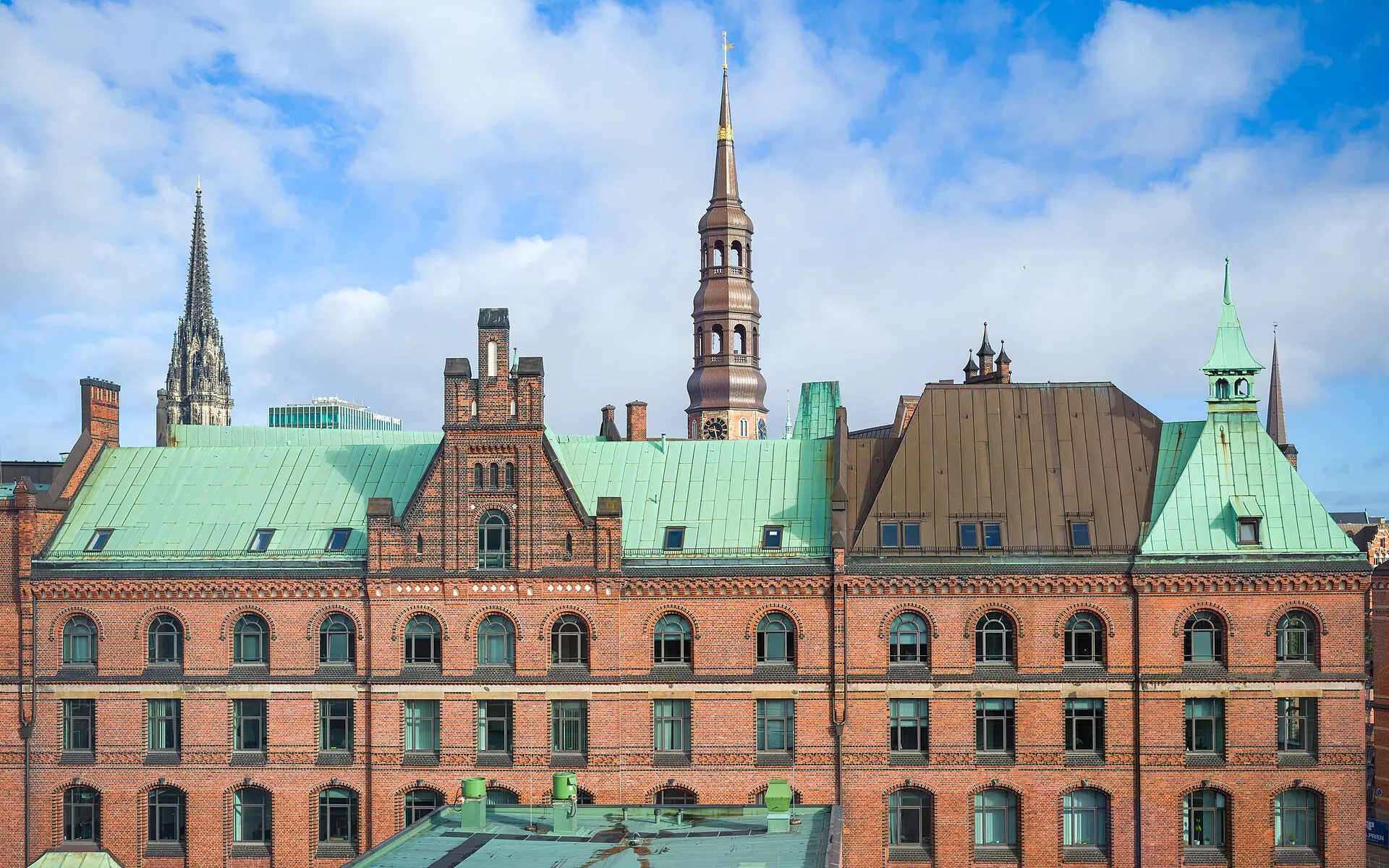
Nearly everyone who comes here walks through the warehouse quarter, and almost nobody sleeps in it. That gap is what this page is for.
The quarter is a dense grid of brick warehouses standing in water, crossed by bridges, with museums and offices inside them. What it is not is a residential district. There are very few rooms in it, and there was never meant to be.
So the practical question is not whether to stay in the Speicherstadt. It is which neighbouring district puts it on your doorstep, and whether that is worth paying for.
The Altstadt lies directly north, across the canals. This is the default answer: you walk in from one side, the old town is behind you, and the transport in every direction is the deepest in the city. Evenings thin out once the offices empty, which is the standing weakness of the district.
HafenCity lies directly south. The newer quarter shares a border with the warehouses and puts the concert hall at the far end of the same walk. Its own weakness is dinner: restaurants are scattered and few stay open late, so plan the evening rather than improvising it.
Neustadt is a few minutes further and buys back exactly what the other two lack — a dense band of eating, an evening that needs no planning, and rooms across more price bands. If the warehouse quarter is one attraction among several, this is usually the better base.
This is the part that changes a trip, and it costs nothing.
Between mid-morning and late afternoon the quarter is a route: coach groups, queues at the model railway, bridges crowded at exactly the points worth photographing. It is still handsome. It is not remotely calm.
At first light, and again after dark when the warehouses are lit, it becomes a different place entirely — quiet, reflective, largely empty. Nobody sells you a ticket for that, and it is the single best free hour available in this city.
Proximity is what makes it practical. Nobody travels twenty minutes across town at six in the morning to look at brickwork. Somebody staying four minutes away does it without thinking, which is the real argument for booking near here rather than merely central.
The Speicherstadt page covers the quarter itself in full.
The model railway attraction, which is the busiest indoor ticket in the city and the reason a great many families come at all. Book ahead, go early, and read the page on it before choosing a time slot.
The concert hall, at the western tip of the newer quarter. If you have tickets, the Elbphilharmonie page deals with the accommodation side of a concert night, which turns on the walk home rather than the view.
The maritime and coffee museums inside the warehouses themselves, which is where this district goes on a wet afternoon — Hamburg in the rain has the rest of that list.
Ask what the room faces. In the older quarter that can mean a canal, and it can equally mean a courtyard three metres wide.
Check whether the property is inside the newer quarter or merely uses its name. The boundary is generous in marketing and specific on a map.
Consider a weekday. The bridges on a Saturday afternoon in summer are a queue with a view, and the same walk on a Tuesday is close to empty.
And compare a night here against a night in Neustadt before you commit. The difference in walking time is small. The difference in what you do at eight in the evening is not.
No opening hours, no ticket prices, no museum timetables. Every one of those belongs to the institution concerned and changes by season.
Walking times are absent for the same reason they are absent everywhere on this site: we publish them once they are measured, and not before. Check the route yourself; it takes ten seconds and it will be right.
If the choice has narrowed to the two waterfront options, Neustadt against HafenCity takes it apart properly.
Measured on the real pedestrian network from the middle of each district, not in a straight line, which around here would lie to you: the Elbe and the canals decide most of these walks.
Beyond a 45-minute walk, and therefore a train question rather than a walking one: Eimsbüttel, Ottensen, Uhlenhorst, Eppendorf, Winterhude, Barmbek.
The old town between the main station and the warehouse district, dense with sights and with the widest choice of transport. Convenience first; character comes second here.
New-build waterfront quarter on the Elbe, wide and orderly, with the concert hall at the end of the promenade. Calm after dark, which suits some trips and disappoints others.
Between the inner lake and the harbour, with the arcades, the opera and most of the city-centre hotel stock. If you want to walk everywhere and never take a train, this is the address.
Distances and journey times belong to the operator and to your own map application, and we do not estimate them from memory. This page tells you which districts serve this address and what each one costs you in return. See how we rank for the standard.
Last reviewed . Editorial analysis, not a first-hand account. No property is named and no price appears anywhere on this site.