City guide
Getting around Hamburg
How Hamburg public transport is put together, what the ticket categories mean and which questions to ask, with fares left to the operator where they belong.
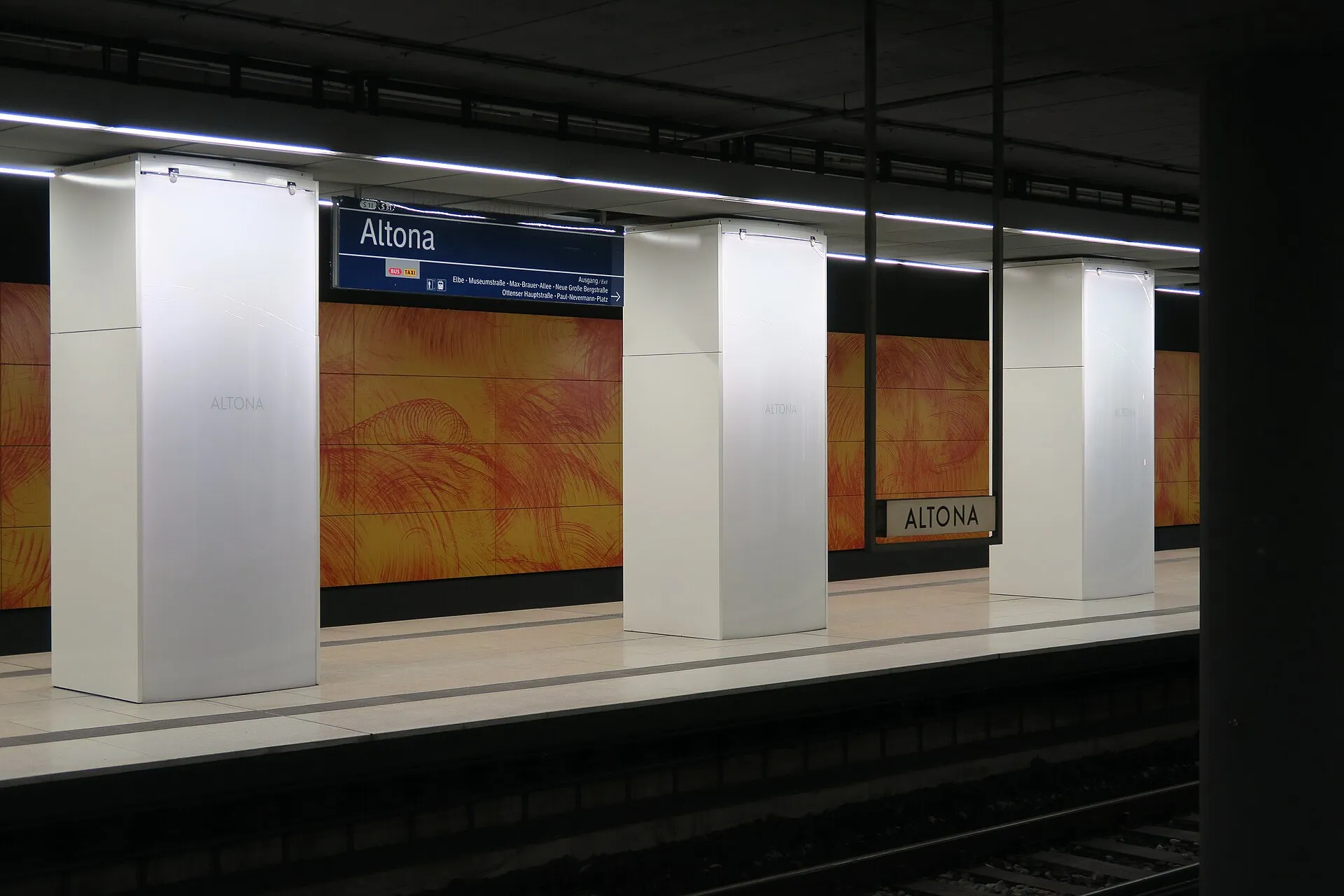
Hamburg’s transport is straightforward once you understand its shape, and confusing if you try to learn it fare by fare. This page covers the structure and the questions worth asking. Prices sit in a block of their own at the bottom, each carrying the operator’s link and the day we read it, and why they are kept apart from the prose is explained there too.
The shape of the system
One authority runs everything. The regional transport association, the HVV, covers the suburban trains, the underground, the buses and the harbour ferries under a single ticketing system. That is the most useful fact about moving around this city: you buy a ticket for an area and a duration, not for a mode.
Suburban rail carries you across the city and out to the airport and the surrounding towns. It runs at the surface for much of its route, so it is also the best way to see how the districts fit together.
The underground covers the inner city more densely, with lines that overlap in the centre. Its coverage is why the central districts score so well on transport depth: when one line fails, another usually runs a few streets away.
Buses fill the gaps and matter more than visitors expect, particularly for cross-town journeys that would otherwise need two changes. Some routes carry high frequencies on the main corridors.
Ferries are the surprise. The harbour lines are ordinary public transport, run on ordinary tickets, and cross a working port. Sightseeing operators sell cruises separately at commercial prices, and for many visitors the scheduled ferry does the same job for the cost of a normal journey.
What the ticket categories mean
You are choosing along three axes, and knowing them makes the machine comprehensible.
Zones. The network is divided into rings, and your fare depends on how many you cross. Almost everything a visitor does sits within the inner zones; the airport and the outer towns are where this starts to matter.
Duration. Single journeys, day tickets, and passes covering several days. Day tickets frequently have a cheaper variant valid from mid-morning, which is worth knowing if your day starts late.
Party size. Group and family day tickets exist and change the arithmetic substantially for two or more people. Travellers routinely buy singles when a group ticket would have been cheaper by the second journey.
There are also city passes aimed at visitors that bundle transport with attraction discounts. Whether one pays depends entirely on your itinerary, and the honest answer for most short trips is: possibly not, if you are staying centrally and walking.
The questions worth asking before you buy
- How many journeys will you actually make? A base in a walkable district may produce two or three a day, which is often below the break-even for a day ticket.
- Does your trip cross into the outer zones? The airport journey usually does, and it is the most common reason a visitor’s ticket turns out to be invalid.
- Are you travelling as a group? If so, price the group ticket first rather than last.
- Does your accommodation include anything? Some properties in this city include a transport ticket in the rate, and guests frequently do not notice.
Validity, and the one thing that catches people out
Tickets are checked by inspectors rather than by barriers on most of the network. That is not an invitation: fare evasion carries a substantial penalty and inspections are routine, particularly on the suburban lines.
The specific trap is buying a ticket for too few zones. Nobody stops you, the journey completes, and the problem only appears if you are checked. Work out the zones before the journey rather than after.
Getting to and from the airport
The airport is connected to the network by a suburban rail branch, which is direct to the main station and takes a predictable amount of time regardless of traffic. This is the default answer for almost every visitor, and it is why very few people here recommend a taxi from the airport.
The journey crosses into an additional fare zone, which is the detail worth checking when you buy.
Walking, which does more work here than the map suggests
Within a district, walking is usually right, and the water makes it pleasant. Between districts it often is not, because this city is longer than it looks and some of the connecting stretches run past port infrastructure rather than through streets.
The practical division most visitors settle into: walk locally, take the network between quarters, and use a ferry at least once because it is the same price as a train and considerably better.
Cycling and taxis
The city is flat, which makes cycling genuinely viable, and there is a public hire scheme alongside commercial operators. Cycle infrastructure is good by international standards and inconsistent by Dutch or Danish ones, so confidence in traffic matters.
Taxis and ride-hailing both operate normally. Neither is necessary for a conventional visit, and both are slower than the underground across the centre at busy times.
How much transport you will actually use
Worth estimating before you buy anything, because the answer varies more than visitors expect.
A stay in a central district with a walkable radius can produce as few as two journeys a day, and some days none at all. In that case single tickets may well be cheaper than a pass, and the transport budget for the whole trip is negligible.
A stay further out, or a trip with attractions spread across the city, easily produces six or more journeys a day for a family. That is where day tickets and group tickets change the arithmetic completely, and where failing to compare them costs real money over several days.
The district pages note how well served each quarter is, and that figure is worth weighing alongside the room rate. A cheaper room that adds four journeys a day is not always cheaper.
Accessibility and luggage
Most of the network is step-free, though coverage is not universal and older stations vary. If this matters, check the specific stations on your route rather than assuming, since the operator publishes that information and a wrong assumption is expensive at the moment of arrival.
Luggage travels free on public transport here, and the suburban line from the airport is the usual arrival route. The practical difficulty is rarely the train and usually the last few hundred metres, which is why the walk from the station to the address is worth checking before you book a room.
Night services and late returns
The network reduces overnight rather than stopping entirely, with night buses covering the gaps and some lines running through the weekend. For a visitor staying centrally this rarely comes up. For anyone based further out and intending to be out late, the last connection is worth knowing before the evening starts rather than during it.
This is one of the quieter arguments for a central base on a short trip: the transport question simply stops being part of the evening.
Where the numbers come from, and why they sit apart
Fares, zone boundaries, ticket names and journey times belong to the operator, and they change. A guide that quotes them from memory produces a figure that looks authoritative and is quietly wrong, which is worse for you than an admission that we do not know.
So the figures below were read on the operator’s own pages rather than on a booking site, and each one carries its link and the date it was read. They live in a block instead of being sprinkled through the prose for a practical reason: a fare written into four paragraphs gets corrected in three of them, and the fourth goes on quoting last year’s price to a reader who has no way of telling. One block means one place to correct, once a quarter. Check the link on your travel dates anyway, and the method page explains the standard.
Two groups need more than this page gives them. Anyone driving should read arriving by car before booking anything, and anyone who needs step-free routes should start with the accessible guide.
The figures, with the date we read them
Read on the operator's own site, never on a booking page or a search summary. Fares move: check the link before you rely on the number.
- Single ticket, Hamburg AB
- A single ticket for the Hamburg AB zone costs €4.10 for an adult and €1.50 for a child. (hvv — single and day tickets, read )
- Day ticket, Hamburg AB
- A day ticket for the Hamburg AB zone costs €8.20 for an adult and €3.00 for a child, and carries one adult plus up to three children aged 6 to 14 until 6 am the following day. (hvv — single and day tickets, read )
- Hamburg CARD
- The Hamburg CARD starts at €12.90 for one day, covers second-class travel on all hvv services in the Hamburg AB zone for one adult with up to three children aged 6 to 14, and gives up to 50 % off more than 150 attractions. It is sold for one to five consecutive days and runs out at 6 am the morning after the last day. (hvv — Hamburg CARD, read )
- Harbour ferry 62
- Harbour ferry line 62 runs from Landungsbrücken bridge 3 to Finkenwerder and is timetabled by the hvv as line F62, inside the ordinary fare system rather than as a cruise. (hvv — line F62 timetable, read )
- Airport to the Hauptbahnhof
- S-Bahn line S1 runs between Hamburg Airport and the Hauptbahnhof every 10 minutes, with a journey time of 25 minutes each way. (Hamburg Airport — arrival and departure, read )
Last reviewed . Editorial analysis and reference information only. Nothing here is a first-hand account.
Common questions
- How does public transport work in Hamburg?
- One authority, the HVV, runs a single ticketing system across suburban trains, the underground, buses and harbour ferries. A ticket is valid across all of them within the zones it covers, so you choose a zone and a duration rather than a mode of transport.
- Are the harbour ferries part of public transport?
- Yes. The ferry lines run on ordinary HVV tickets rather than tourist fares, which makes a trip on the water one of the cheapest things to do in the city. Sightseeing cruises are a separate commercial product with separate pricing.
- Do I need a travel pass for Hamburg?
- It depends entirely on how much you will move. A base in a central district with a walkable radius may need very few journeys. Compare the day-ticket price against your planned trips: the current fares sit at the foot of this page with the date we read them, and the operator’s own site is the last word on your travel dates.
- Is Hamburg easy to get around without German?
- Yes. Machines and apps offer English, station signage is legible, and the network map is conventional. The main difficulty is the zone system rather than the language, and asking at a service counter resolves it quickly.