City guide
Getting from the airport into the city
How the airport connects to central Hamburg, which option suits which arrival, and the one ticketing mistake that catches most first-time visitors out.
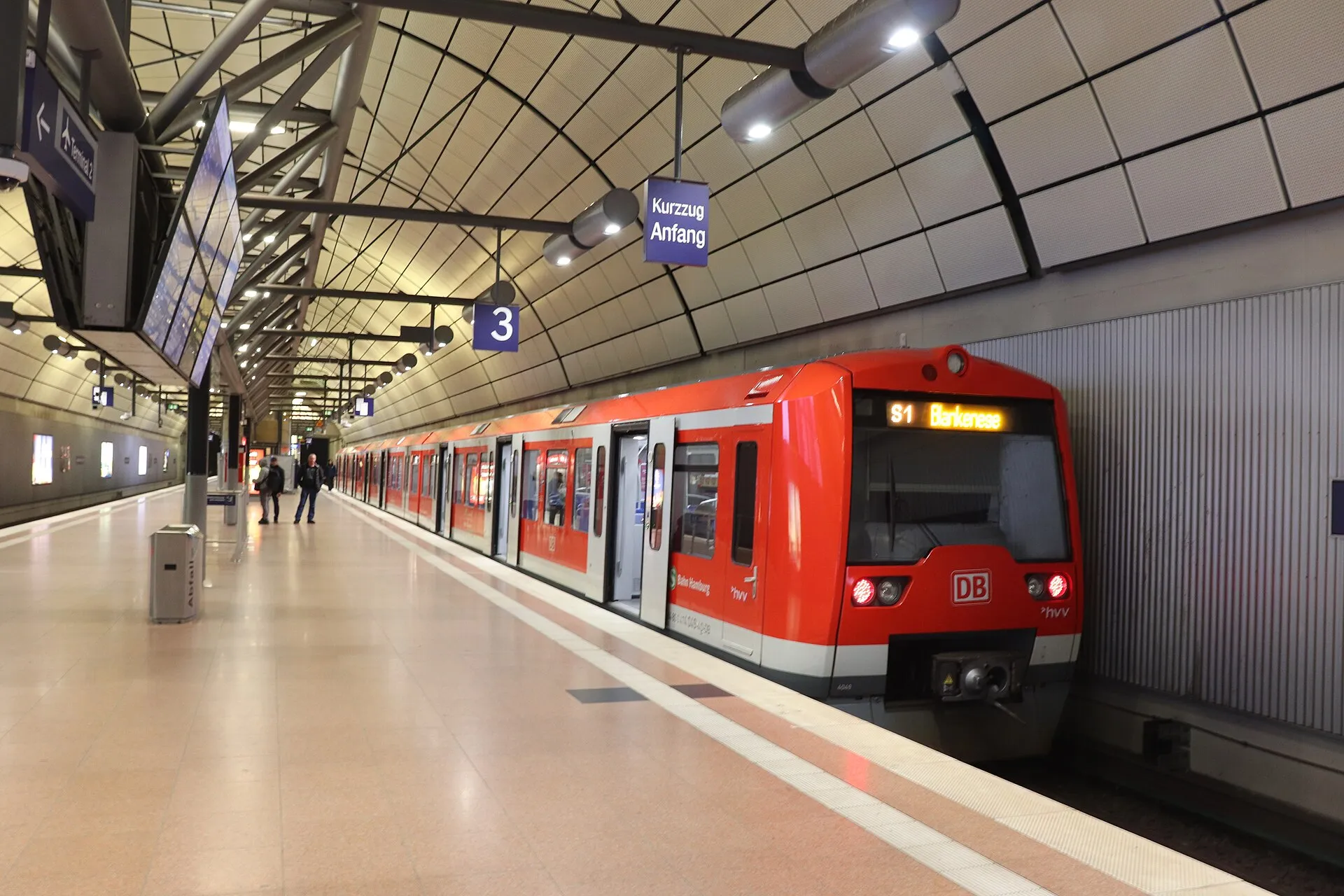
Arrival is the first thing this city asks you to get right, and it is easy. There is a direct rail connection from the airport into the middle of town, it runs on ordinary transport tickets, and it is not affected by traffic.
The only thing that regularly goes wrong is the ticket, and this page exists mostly to prevent that.
The rail connection
A suburban rail branch runs from the airport terminal to the main station, and from there the whole network is available. Trains run frequently through the day and the journey is short.
Two things make this the default answer for almost every visitor. It is unaffected by road conditions, which at rush hour is worth more than it sounds. And it drops you at the point where every other line meets, so onward travel to any district is straightforward.
The platforms are directly beneath the terminals, so the walk is short even with luggage, and the route is signed.
The ticketing mistake
The airport sits in an additional fare zone. A ticket bought for travel within the central zones does not cover the journey, and this is the single most common error first-time visitors make in this city.
Nothing stops you: there are no barriers on most of the network, the journey completes, and the problem only appears if an inspector checks you. Fare evasion carries a substantial penalty here and inspections on this route are routine, precisely because so many arriving visitors get it wrong.
The fix takes thirty seconds. Buy at a machine in the terminal or in the operator’s own app, and set the airport as the starting point rather than selecting a generic city ticket. If a day ticket makes sense for the rest of your arrival day, buy the version that includes the airport zone.
Fares and zone names belong to the operator and change, so no figure appears on this page. The transport guide explains how the ticketing system is structured, which is the part that confuses people more than the price does.
Taxis and ride-hailing
Both operate normally from the airport, and neither is necessary for a conventional arrival.
A taxi makes sense in three situations: a very late arrival when the network has thinned, a party with more luggage than hands, or a destination in an outlying district that would otherwise need two changes. With small children it is often worth it simply to remove one variable from a long day.
Otherwise you are paying a considerable amount to sit in traffic that the train goes underneath.
Buses and shuttles
Bus routes serve the airport as part of the same network, which occasionally gives a better connection to a specific district than routing through the main station does. Check the operator’s journey planner with your actual address rather than assuming the train is always fastest, because for some northern addresses it is not.
Hotel shuttles exist at a handful of properties near the airport and are worth asking about only if you are staying in that immediate area, which most visitors should not.
Arriving late
The network reduces overnight rather than shutting down, and night services cover part of the gap. What that means for you depends entirely on your arrival time and your destination.
Check the operator’s timetable for your actual landing time before you travel, and have a fallback. A delayed flight plus an assumption about the last train is how people end up paying for a taxi at three in the morning, which is precisely the situation a five-minute check avoids.
If your flight lands late by design, that is also an argument for staying in the Altstadt, which puts the main station within walking distance of a large number of addresses.
Leaving: how much time to allow
Work backwards from the check-in deadline, and add a margin for the rail branch rather than the road, since the train is the predictable leg and the walk through the terminal is not.
For an early departure, the district you chose at booking matters more than anything you can do on the morning itself. The business page covers this in more detail, and the short version is that being able to walk to the main station is worth a great deal at five in the morning.
Which district to head for
If you have not booked yet, arrival logistics are a genuine input to that decision, though a minor one on a longer trip.
Central districts are simplest: one journey, no changes, walkable from the station in many cases. The western quarters need one connection and are still straightforward. The northern residential districts are the most awkward on arrival day and the most pleasant thereafter, which is the trade the district comparison sets out in full.
Arriving with luggage, children or both
The connection is straightforward and the details around it are what make an arrival pleasant or exhausting.
Lifts and step-free routes exist on this journey, and the operator publishes where they are and whether any are out of service. Check that on the day rather than assuming, particularly if the party includes a pushchair or a case that cannot be carried down stairs — the step-free page explains why a planned route beats an improvised one.
Think about the last few hundred metres as well as the journey. A hotel three minutes from a station is a different arrival from one twelve minutes away over uneven pavement, and that difference is felt entirely by whoever is pulling the luggage. Look at it on a map before you commit, not afterwards.
Where the party splits across two arrivals, agree a meeting point at the destination rather than at the airport. Waiting in a warm lobby beats waiting in an arrivals hall, and it removes the problem of one flight being delayed.
The first hour, once you are in
Two small things worth doing before anything else, because both get harder later.
Sort your transport arrangement for the rest of the stay. Whatever suits your pattern of journeys, deciding it once at the start is cheaper and simpler than buying singles for four days — the specifics belong to the operator, and comparing them takes a couple of minutes at a machine.
Then, if the room is not ready, leave the bags and go out. Almost every property will store luggage before check-in, and the alternative — sitting in a lobby until three — wastes the one part of an arrival day that is still useful.
Where the numbers on this page live
The line, the journey time and the fares sit in a dated block at the foot of the page rather than in these paragraphs, each with the operator’s own link beside it.
That is not fussiness. All of it belongs to the transport authority and all of it changes, and a stale figure buried mid-paragraph would send you to a machine with the wrong expectation at the one moment on your trip when you are least able to absorb a surprise. Kept in one block, it gets corrected in one place. Their app and website remain the last word on your own arrival date, in English, and take a minute to check.
The short version
Take the train, buy a ticket that includes the airport zone, and ignore the taxi rank unless it is late or you have too much luggage. Check the timetable in advance if you land after the evening. That is the entire arrival problem in this city, and it is smaller than in most.
The figures, with the date we read them
Read on the operator's own site, never on a booking page or a search summary. Fares move: check the link before you rely on the number.
- Airport to the Hauptbahnhof
- S-Bahn line S1 runs between Hamburg Airport and the Hauptbahnhof every 10 minutes, with a journey time of 25 minutes each way. (Hamburg Airport — arrival and departure, read )
- Single ticket, Hamburg AB
- A single ticket for the Hamburg AB zone costs €4.10 for an adult and €1.50 for a child. (hvv — single and day tickets, read )
- Day ticket, Hamburg AB
- A day ticket for the Hamburg AB zone costs €8.20 for an adult and €3.00 for a child, and carries one adult plus up to three children aged 6 to 14 until 6 am the following day. (hvv — single and day tickets, read )
- Hamburg CARD
- The Hamburg CARD starts at €12.90 for one day, covers second-class travel on all hvv services in the Hamburg AB zone for one adult with up to three children aged 6 to 14, and gives up to 50 % off more than 150 attractions. It is sold for one to five consecutive days and runs out at 6 am the morning after the last day. (hvv — Hamburg CARD, read )
Last reviewed . Editorial analysis and reference information only. Nothing here is a first-hand account.
Common questions
- What is the best way to get from Hamburg airport to the city centre?
- The suburban rail branch that runs directly from the terminal to the main station. It is quick, unaffected by traffic and part of the ordinary transport network, which is why almost nobody who knows the city recommends a taxi from arrivals.
- Do I need a special ticket from Hamburg airport?
- You need a ticket covering the additional fare zone the airport sits in, which is the single most common mistake first-time visitors make. Buy at the machine or in the operator app, and select the airport as your starting point rather than assuming a central ticket covers it.
- Is there a night connection from Hamburg airport?
- The network reduces overnight rather than stopping entirely, with night services covering part of the gap. Late arrivals should check the operator timetable for their actual arrival time before assuming a train will be waiting, and have a fallback in mind.
- How long does it take to get into central Hamburg?
- Short, predictable and unaffected by road traffic, which is the real advantage over a taxi at rush hour. The current journey time and frequency, as published by the airport itself, sit in the dated block at the foot of this page alongside the fares.